Home › Asphalt Resurfacing & Overlays
Refresh tired pavement with asphalt resurfacing in Omaha, NE. We mill or clean the existing driveway, fix problem areas, then install a smooth overlay that restores appearance and function. Resurfacing is often a budget friendly alternative to full replacement when the base is still sound.
Precision Asphalt Omaha provides professional asphalt resurfacing throughout Omaha, NE, Nebraska and the surrounding area. Our licensed, insured crew delivers safe, clean, on-time work with a free estimate before anything begins. Call (402) 370-7792 or request your free quote.
Asphalt Resurfacing & Overlays in Omaha, NE
If your parking lot or driveway is cracked, rutted, or rough but the base is still solid, asphalt resurfacing (also called an overlay) can restore it without the cost of a full tear-out. Precision Asphalt Omaha focuses on resurfacing projects across Omaha and the surrounding communities, from compact driveways in Benson to high-traffic lots near 72nd and Dodge.
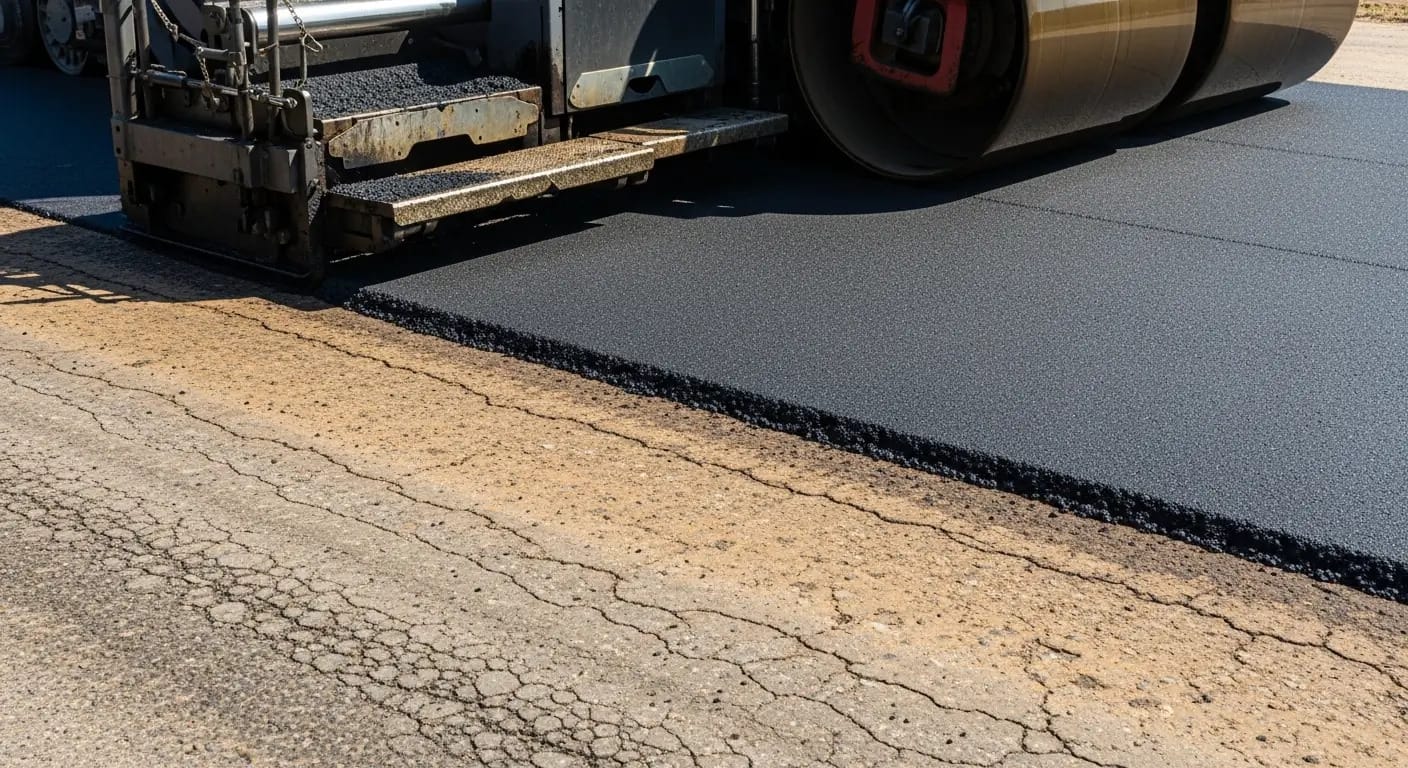
Resurfacing works by repairing the existing surface, then installing a new layer of hot-mix asphalt over the top. This gives you a fresh, smooth driving surface and extends the life of the pavement by 8 to 15 years when it is done correctly and maintained. It is not a shortcut to avoid proper base work. Before we suggest an overlay, we look closely at the underlying structure to make sure your money is going into a long-term fix, not a bandage.
In the Omaha climate, with freeze-thaw cycles, winter salting, and heavy snow equipment, resurfacing has to be done with attention to drainage, thickness, and edges. A generic one-size-fits-all overlay usually fails early here. Precision Asphalt Omaha spends more time upfront evaluating grades, catch basins, and transition points so the new layer sheds water correctly instead of trapping it and accelerating damage.
How Asphalt Resurfacing Is Actually Done
A good overlay project is mostly won or lost in the prep work. Our process at Precision Asphalt Omaha follows a consistent sequence, adjusted for each property.
First, we walk the entire site with you. We note standing water areas, sunken spots, deep cracks, soft edges, and traffic patterns like delivery truck routes or dumpster pads. We probe questionable areas with hand tools and, where needed, core sample to check base depth and condition. If we find widespread base failure, we will recommend partial or full reconstruction instead of a resurfacing so you do not pay for a layer that will quickly crack again.
Second, we handle structural repairs. This usually includes milling or cutting out potholes and severely alligatored areas down to firm base, then rebuilding with new base rock and binder asphalt. Large cracks are cleaned, routed when appropriate, and filled with hot rubber crack sealant so they do not reflect straight through the new layer within the first winter.
Third, we mill key areas to maintain proper thickness and transitions. At Omaha driveways that meet city sidewalks or curb lines, we typically mill the existing asphalt at those joints so the new overlay does not leave a bump or create a trip hazard. In commercial lots, we mill around drains and utility covers so the grate and lid heights end up flush with the new surface instead of below it.
Fourth, we clean and tack coat the existing pavement. The surface is swept and blown clean to remove grit and dust, then we apply an asphalt emulsion tack coat. This tack acts like glue so the new asphalt layer bonds to the old pavement rather than just sitting on top. Skipping or skimping on tack is a common shortcut that leads to slippage and early failure.
Finally, we install and compact the new overlay. For most overlays in Omaha, we place 1.5 to 2.5 inches of hot mix in one lift, though heavy-load areas like loading zones may get thicker sections. We use vibratory steel drum rollers and smaller finish rollers to achieve the right density, paying close attention at joints, along curbs, and at garage doors so water runs away from structures and into the street or drains.
Overlay Options, Thicknesses, and Local Conditions
Not all overlays are the same. Precision Asphalt Omaha tailors the mix and thickness based on how you use the pavement and what our soil and weather will do to it.
For homeowner driveways, we usually recommend a finer surface mix that compacts tightly and looks cleaner. A typical residential overlay in Omaha is about 1.5 to 2 inches thick, depending on existing grades. This is enough to give a solid, smooth surface without raising the driveway so much that it interferes with garage thresholds or sidewalk crossings. We pay special attention to older neighborhoods like Dundee and Aksarben where existing grades are tight.
For commercial parking lots with heavier traffic, such as medical offices, small retail centers, or churches, we often use a coarser surface mix that holds up better under turning movements. Thickness often runs 2 to 2.5 inches, and heavier drive lanes that see delivery trucks or trash trucks may get extra localized build-up or a stronger binder course under the surface.
In areas with known drainage problems, like flat lots in West Omaha or properties along low-lying areas, we adjust the overlay design to create better slopes toward drains. Sometimes this means slightly thicker build-up on the high side and careful feathering toward the low points. It costs a bit more time and material, but if we do not fix the water path, the overlay will suffer from potholes and raveling in just a few seasons.
If you are in an HOA-controlled neighborhood, it is also common for associations in Omaha to have rules on appearance and access during work. We can provide written scope details, phasing plans, and color diagrams for your board so they can review thickness, striping layout, and access management ahead of time. This keeps resurfacing projects from getting delayed at the last minute due to approvals.
Cost Drivers, Permits, and What Can Go Wrong
Resurfacing is usually 30 to 50 percent less expensive than full removal and replacement, but prices vary based on a few real factors. Thickness of the overlay is a main driver, since more asphalt means more cost. The amount of prep work, milling, and patching also matters. A driveway with only minor cracks will be less expensive per square foot than a parking lot with dozens of failed areas that need base repair.
Access affects cost too. Lots that require tight machine maneuvering, night work to avoid business disruption, or extra traffic control will be more labor intensive. On commercial sites in Omaha, we sometimes phase overlays over two or three nights so tenants can keep operating. That planning time and off-hour work is part of the quote.
Within Omaha city limits, most resurfacing of private driveways does not require a permit, as long as we are not changing curb cuts or working in the public right-of-way. For commercial lots or any work that affects sidewalks, approaches, or drainage to public storm inlets, the city or county may require review and right-of-way permits. Precision Asphalt Omaha handles those submittals when they are needed and coordinates any required inspections.
If an overlay fails, it usually comes down to one of three problems: the existing base was not sound, the surface was not properly bonded, or water was not managed. Reflective cracking, where old cracks show through the new layer, is common when crack repairs are rushed or the base is moving. Slippage or shoving often shows up where tack coat was skipped. Early potholes form in areas where water sits or where base was never repaired. We design our resurfacing work in Omaha with those failure modes in mind, using extra milling and patching where needed instead of masking problems with a thin coat.
We are also realistic with customers. If your pavement has widespread base failure, especially in older industrial areas or on drive lanes where semis turn sharply, we will tell you that resurfacing is not the right investment. In those spots, we might recommend targeted full-depth replacement now, combined with resurfacing of the more stable areas, to stretch your budget without pretending that an overlay will fix structural issues.
What Omaha Property Owners Should Know Before Hiring
Before you sign a contract for asphalt resurfacing, there are a few practical checks you can do. Ask the contractor how they determined that resurfacing is appropriate instead of full replacement. They should be able to explain what they saw in your base, how deep the cracks go, and why they think an overlay will last.
Request details on milling and transitions. Any Omaha contractor doing overlays should be able to show you where they plan to mill around curbs, sidewalks, drains, and building entrances so your new surface does not create trip edges or water traps. This is especially important if your property ties into city sidewalks or ADA routes.
Confirm the overlay thickness and asphalt mix type in writing. A vague promise of a "thick coat" is not enough. At Precision Asphalt Omaha, our proposals list the target compacted thickness, the number of lifts if there is more than one, and whether we are using a surface or binder/surface combination. This protects you from getting a thin skin that will not hold up to Nebraska winters.
Discuss scheduling and access. For homes, that means planning around garage use and on-street parking rules. For businesses, it means figuring out which entrances must stay open, what hours are acceptable for noise, and how to communicate with tenants or customers. We often provide simple door hangers or emails that property managers can share so everyone knows when sections will be closed.
Finally, ask about maintenance expectations after the overlay. In Omaha, we typically recommend the first sealcoat after 2 to 3 years (not immediately), routine crack sealing as soon as new cracks appear, and careful plow operation in winter using rubber edges where possible. When you work with Precision Asphalt Omaha, we go over a basic care plan specific to your property so you know how to get the full life out of your new asphalt resurfacing.