Home › Commercial Asphalt Resurfacing & Overlays
Revive aging pavement with commercial asphalt resurfacing in Omaha, NE. We repair failures, adjust drainage, then apply a smooth overlay to extend the life of lots and drive lanes. This approach reduces downtime and cost compared to full reconstruction when the base is still solid.
Precision Asphalt Omaha provides professional commercial asphalt resurfacing throughout Omaha, NE, Nebraska and the surrounding area. Our licensed, insured crew delivers safe, clean, on-time work with a free estimate before anything begins. Call (402) 370-7792 or request your free quote.
Commercial Asphalt Resurfacing & Overlays in Omaha
Commercial asphalt resurfacing is often the most cost effective way to restore a worn parking lot or private drive lane in Omaha without paying for a full tear out and replacement. Precision Asphalt Omaha focuses on overlays for retail centers, offices, churches, HOAs, and industrial sites that need a smooth, professional surface that can stand up to Nebraska weather and traffic.
In our area, freeze thaw cycles, snow plowing, deicing chemicals, and heavy delivery trucks tend to break down the top layers of asphalt long before the base completely fails. That is where commercial resurfacing makes sense. By installing a new asphalt layer over a sound base, we give your pavement another 8 to 15 years of service while keeping your business open with minimal disruption.
Our team lives and works in the Omaha metro, so we know how local drainage patterns, city specs, and seasonal temperature swings affect a resurfacing project. We design each overlay around those realities, not a one size fits all template.
How Commercial Asphalt Resurfacing Works
A successful overlay starts with a careful evaluation, not a quick estimate in the parking lot. Precision Asphalt Omaha begins by walking your site, coring or probing suspicious soft spots, and mapping out cracks, ponding areas, and utility covers. In general, if one third or more of the surface is alligator cracked or the base is pumping mud under load, we will discuss partial or full reconstruction instead of a simple resurfacing.
If the existing base is sound, we prep for overlay. This usually includes milling or grinding down around transitions such as concrete approaches, entrances, and garage thresholds so the new asphalt layer ties in flush with existing surfaces. We chip out loose material, clean the surface with mechanical brooms and blowers, and apply a tack coat that helps the new asphalt bond to the old pavement.
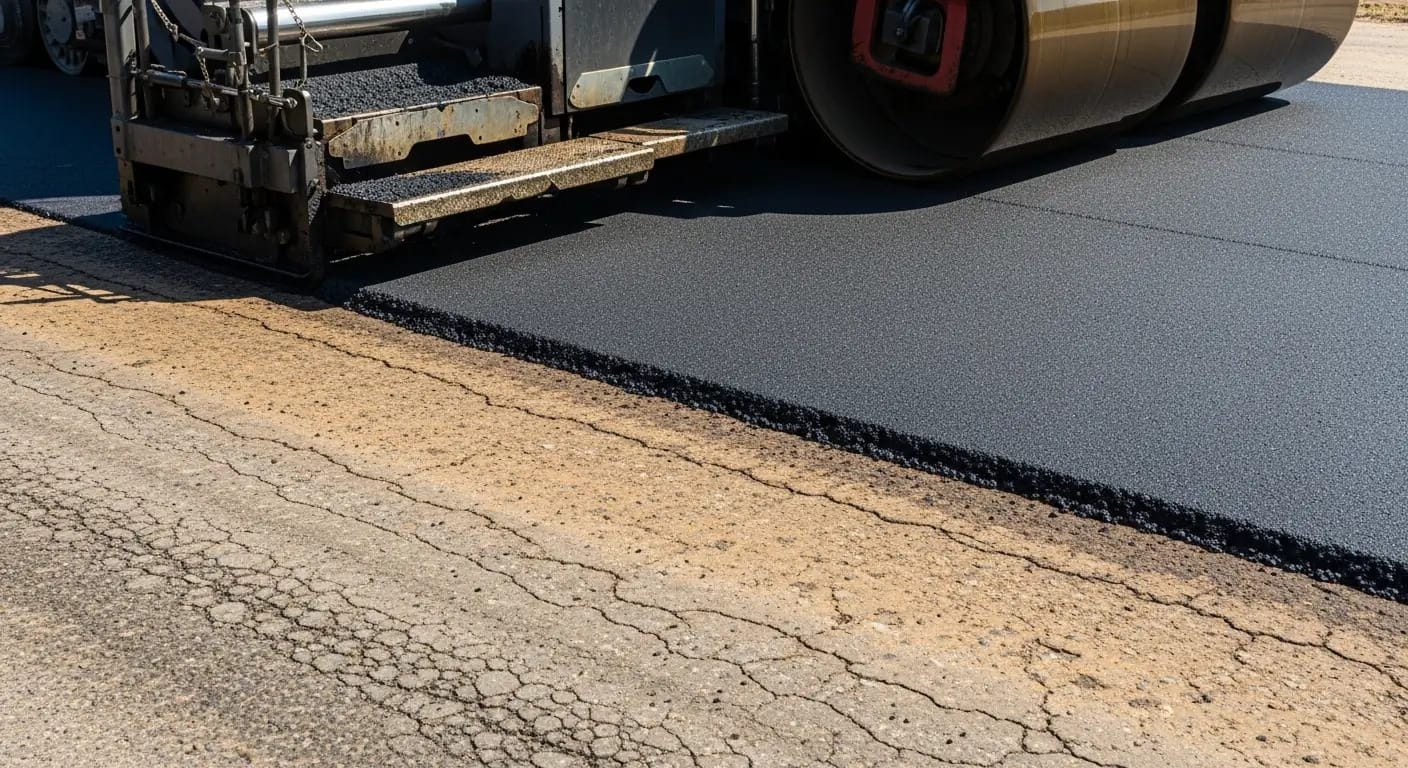
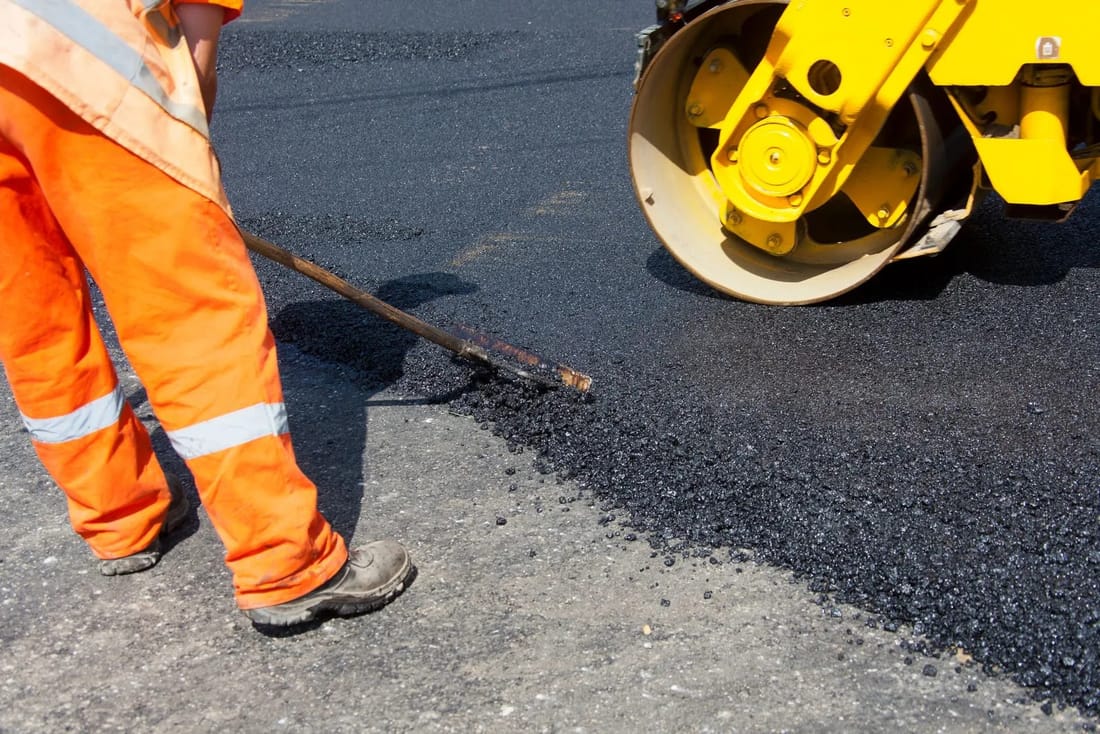
Once prep is complete, we install a new lift of hot mix asphalt at the specified thickness, typically in the 1.5 to 2.5 inch range for commercial resurfacing in Omaha. The mix is placed with a paver, then compacted with vibratory rollers to lock the new mat to the underlying asphalt. The result is a smoother, safer driving and walking surface without the cost and downtime of removing everything.
Overlay Thickness, Materials, and Design Choices
The right overlay thickness and mix type can add years to your pavement. Too thin, and reflective cracking shows back through within a couple of winters. Too thick in the wrong spots, and you create drainage and door clearance problems. At Precision Asphalt Omaha, we match the design to how your property is actually used.
Light duty commercial areas such as small offices or medical clinics may only need a 1.5 inch overlay with a fine graded surface mix, which gives a smooth finish that is easier to stripe cleanly. Busy retail centers at 132nd Street or along Dodge that see frequent turning traffic at stop signs and drive lanes may benefit from a 2 inch or thicker overlay with a more stable mix to resist shoving and rutting. Loading zones and dumpster pads that see semi traffic often call for localized thickening or even small full depth replacement sections, blended into the surrounding overlay.
We also look at drainage and slope. Omaha gets intense downpours, and overlays can unintentionally flatten areas that already drain slowly. Before paving, we check grades with a level or laser and may recommend minor milling to preserve positive drainage away from buildings and entrances.
Common Pavement Problems and How We Address Them
Not every deteriorated surface is a good overlay candidate. Precision Asphalt Omaha is upfront about where resurfacing works and where it will only mask deeper issues for a short time. Alligator cracking across large areas usually signals a failing base. In those spots, we often saw cut and excavate the worst sections, rebuild the base with compacted aggregate, then tie those patches into the overlay so you are not paving over structural problems.
Deep potholes are cleaned out to firm material, squared up, and patched with hot mix before resurfacing. If you simply fill them cold and pave over the top, the patch can shift and telegraph through the new overlay. Wide transverse cracks are routed if needed, cleaned, and filled with hot rubberized crack seal before the overlay to slow reflective cracking.
We also pay attention to Omaha specific issues such as snow plow damage at entrances and along curb lines, areas where sand and salt collect and break down the surface, and spots where standing water turns to ice. Correcting these trouble areas before the overlay, through milling, patching, or adjusting slopes, greatly improves how long your resurfacing will last.
What Affects the Cost of Commercial Asphalt Resurfacing
Businesses understandably want to know what drives project cost. The square footage of asphalt to be resurfaced is the biggest factor, but it is far from the only one. Precision Asphalt Omaha walks you through each element so you know where your money is going and can prioritize.
Existing condition and prep work often have the largest impact. Heavily cracked or settled areas that require milling, base repair, or patching will cost more than a uniform lot that only needs cleaning and tack. Overlay thickness also matters. A 2.5 inch overlay uses significantly more material than a 1.5 inch overlay, but may be the smarter long term choice for high traffic sites with heavy vehicles.
Layout and access play a role too. A wide open industrial yard is faster and more efficient to pave than a tight, cut up retail center with islands, drive thru lanes, and multiple entrances. Working around business hours, such as overnight or weekend work for busy shopping centers near Westroads or in downtown Omaha, can slightly increase cost due to labor timing and lighting needs. We account for all of this in a clear, itemized proposal so there are no surprises.
Working Around Your Omaha Business Operations
A resurfacing project should not bring your business to a standstill. Precision Asphalt Omaha coordinates phasing and scheduling so customers, tenants, and employees can still access your property while we work. For multi building office parks and apartment complexes, we often divide the project into sections. While we overlay one section, traffic is routed through another, then we swap.
For retail and restaurant lots, we commonly schedule milling and paving work during off peak hours, early mornings, evenings, or weekends, to keep your busiest times clear. We provide phasing maps that you can email to tenants or post in lobbies so everyone knows where to park and when.
We also manage communication with delivery services and waste haulers when heavy trucks need temporary rerouting, especially in alleys and shared loading docks. Safety is a priority, with barricades, cones, tape, and clear signage to separate active work zones from traffic and pedestrians.
What to Expect After Your Overlay and How to Maintain It
Once your commercial asphalt resurfacing is complete, we recommend a cure time before striping and full traffic. In warmer Omaha weather, light car traffic can usually return within 24 hours, but heavy truck traffic is sometimes delayed slightly to prevent scuffing at tight turns. Our team will advise you based on the actual mix and temperatures on your paving day.
After the new surface has cured, we lay out and stripe parking stalls, fire lanes, ADA accessible spaces, and directional arrows to meet local codes and maximize parking efficiency. This is an ideal time to fine tune traffic flow, re designate loading zones, or update ADA access routes.
To protect your investment, we suggest a maintenance plan tailored to Omaha conditions. That typically includes periodic crack sealing, addressing drainage issues quickly if new ponding appears, and scheduling sealcoating on an appropriate cycle for your use level. Precision Asphalt Omaha can set up regular inspections, often once a year or every other year, to catch small issues before they grow into expensive repairs, helping your overlay reach its full life expectancy.