Home › Asphalt Sealcoating & Crack Filling
Protect your investment with asphalt sealcoating in Omaha, NE. Our team cleans, crack fills, and applies an even coat of quality sealer to help block water, oil, and UV damage. Regular driveway sealcoating can extend pavement life and keep your property looking sharp.
Precision Asphalt Omaha provides professional asphalt sealcoating throughout Omaha, NE, Nebraska and the surrounding area. Our licensed, insured crew delivers safe, clean, on-time work with a free estimate before anything begins. Call (402) 370-7792 or request your free quote.
Asphalt Sealcoating & Crack Filling in Omaha, NE
At Precision Asphalt Omaha, we treat asphalt sealcoating and crack filling as preventive maintenance, not a quick cosmetic fix. In eastern Nebraska, where freeze-thaw cycles, summer UV, and deicing salts are hard on pavements, properly planned sealcoating can easily add 3 to 7 years of life to a driveway or parking lot. Our crew focuses on cleaning, repairing, and protecting the pavement so it actually performs better, not just looks darker.
We handle projects ranging from small residential driveways in neighborhoods like Millard and Benson to large commercial lots in Omaha’s business parks. Every project starts with a site walk, where we check the condition of the base, drainage patterns, and existing cracks. We then recommend a combination of hot or cold crack filling and a specific sealer type based on how you use the pavement, how old it is, and how much traffic and turning it sees.
Because timing and prep matter more than anything, we schedule work when temperatures and humidity in Omaha are favorable and we only proceed if the surface is clean and dry. That is how we achieve a consistent, durable finish that actually bonds to your asphalt instead of peeling up within a season.
Our Step-by-Step Sealcoating Process
Effective asphalt sealcoating is about surface preparation and controlled application. Precision Asphalt Omaha uses a detailed process that is consistent from one job to the next, because that is what produces predictable results.
Step 1: Mechanical and power cleaning. We start by clearing the surface of loose debris, dirt, grass, and sand with power brooms and high CFM blowers. In Omaha, windblown sand and road grit tend to collect near curbs and at lot entrances, so we pay extra attention to those areas. If there are oil or fuel spills, we treat them with a detergent or degreaser and scrub them, because sealer will not bond to contaminated areas.
Step 2: Edge work and vegetation control. Grass and weeds that have grown into the asphalt edges are cut back and removed. This exposes the full width of the pavement so the sealer can wrap the edge and keep water from creeping under the surface.
Step 3: Crack filling and localized patch prep. Before any sealer is applied, cracks are cleaned with compressed air and, when needed, a wire wheel or router to remove loose material. Larger failed areas are noted for patching or infrared repair. Only when the cracks and bad spots are addressed do we move to sealing.
Step 4: Sealcoat application. We use professional spray systems and, where appropriate, squeegees to apply a uniform coat. On residential driveways or smaller Omaha commercial lots, we often use a squeegee on the first coat to force material into the surface, then spray a second coat for a smooth finish. We follow manufacturer-recommended mix ratios that may include sand and additives for traction and durability.
Step 5: Curing, barricades, and final walk-through. We set up cones or tape to keep traffic off the surface until it is ready. Our crew performs a final check for thin spots, missed edges, or sealer on concrete curbs so we can address any issues before we leave.
How Professional Crack Filling Protects Your Pavement
Crack filling is the part of the job that actually stops water from getting down into the base layer and breaking up your asphalt from below. In Omaha, the winter freeze-thaw cycle accelerates damage in untreated cracks, turning hairline separations into potholes within a couple of seasons.
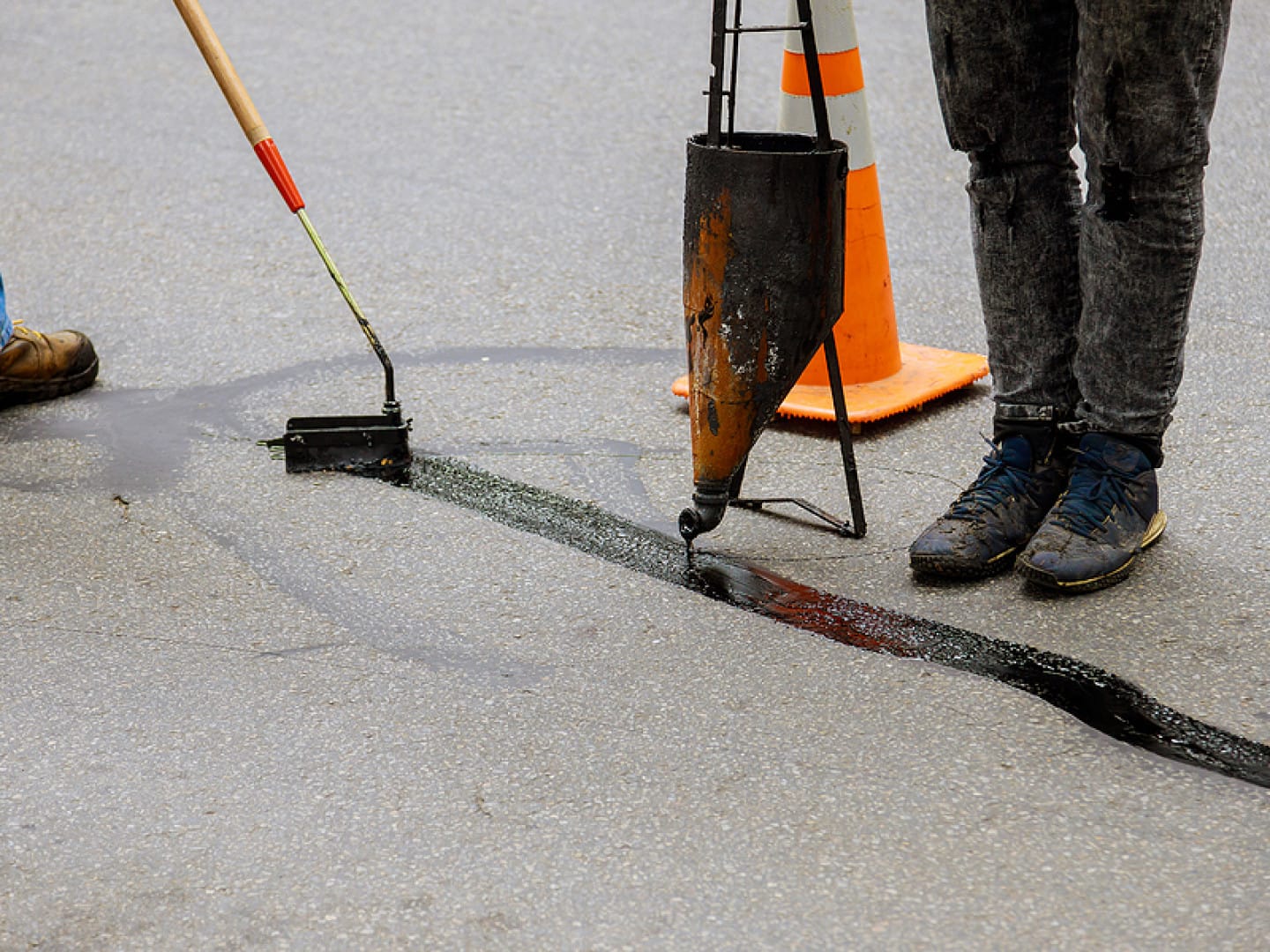
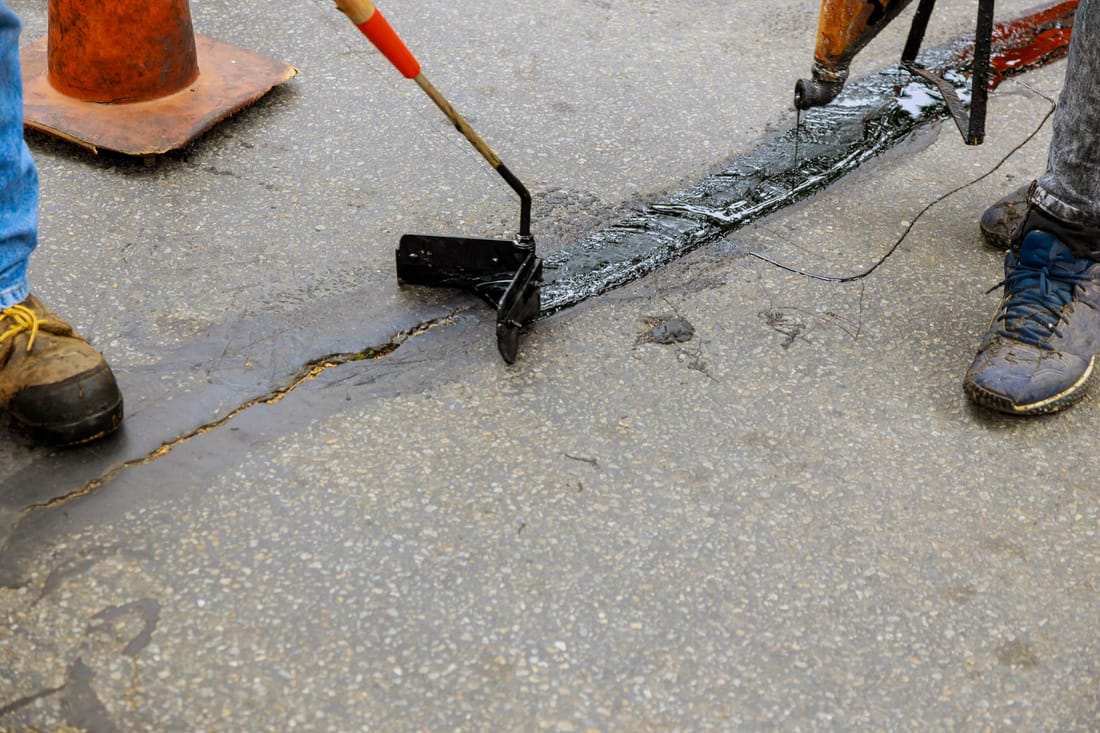
We start by identifying the type of cracking: linear cracks from aging and shrinkage, block or alligator cracking from structural issues, and edge cracks from poor support along the sides. Not all cracks should be filled the same way. For example, wide, stable cracks along joints typically receive hot rubberized crack filler, which is heated in a kettle to a precise temperature and applied with a wand so it flows into the void and adheres to the sidewalls. This flexible material expands and contracts with the pavement through Omaha’s temperature swings.
For smaller, non-working cracks or for residential driveways with lighter traffic, a professional-grade cold pour crack filler may be appropriate. We still clean and dry the crack thoroughly first so the material can key into the asphalt instead of sitting on top. Areas showing alligator cracking usually indicate base failure, so we do not just fill those with sealer. We will recommend patching or replacement of that section so you are not wasting money on a band-aid fix.
Correct crack filling before sealcoating ensures the sealer forms a continuous film on the surface, rather than sinking into open cracks and leaving the rest of the pavement underprotected.
Materials, Options, and What You Can Expect Visually
Not all sealers or fillers are created equal. Precision Asphalt Omaha primarily uses refined coal tar or asphalt emulsion sealers that meet or exceed industry standards, and we adjust the formula to your site conditions. In high traffic commercial lots, we typically recommend a sand-loaded mix for better traction and wear resistance. On residential driveways, we can use a smoother finish that is easier to shovel in winter.
You can choose between a single heavy coat or two thinner coats, depending on budget and performance needs. Two coats, applied with adequate drying time, usually provide better longevity, especially in drive lanes and turning areas where vehicle tires grind away the surface. We avoid over-dilution, a common cost-cutting trick, because it leads to early fading and wear.
Visually, a fresh sealcoat will darken the pavement to a uniform black and help mask surface-level patchwork. However, if your asphalt already has significant depressions, puddling, or deep structural cracking, sealcoating will not make those disappear. We explain upfront what cosmetic improvements you can reasonably expect and where underlying structural problems will still be visible, so there are no surprises once the job is complete.
We also use crack fillers that are compatible with the chosen sealer. This ensures that filled cracks do not bleed through excessively or stay a completely different color, which can be common when low quality materials are mixed together.
Local Timing and Weather Considerations in Omaha
The timing of asphalt sealcoating in Omaha directly affects how well it bonds and how long it lasts. Ideal conditions are typically from late April through early October, when daytime temperatures are consistently above 55 degrees and rising, and the pavement can stay dry for at least 24 hours. We track local weather closely so your job is not rushed before a rainstorm.
High summer heat in July and August can actually help curing, but we plan application times carefully. For south-facing lots or dark, open driveways, we might schedule morning or late afternoon work to prevent flash drying, where the top skins over before the sealer has time to bond underneath. This is one of the reasons local experience in Omaha’s climate matters.
Humidity and shade also play a role. Shaded residential driveways under mature trees in neighborhoods like Dundee or Elmwood may need more curing time than open commercial lots. We will tell you in advance when you can walk and drive on the surface based on sun exposure, air flow, and the specific products used, not just a generic “24 hours” answer.
In early spring and late fall, overnight temperatures can drop quickly. We factor in forecasted lows because if the pavement cools too much before the sealer cures, adhesion and durability suffer. If conditions are questionable, we will recommend waiting rather than risking a subpar result.
What Influences Cost and How We Estimate Your Project
Pricing for asphalt sealcoating and crack filling is not just about square footage. At Precision Asphalt Omaha, we build estimates that reflect the actual condition and use of your pavement so you can see where your money is going.
Key cost drivers include:
Surface condition. Heavily oxidized, gray asphalt that has gone many years without maintenance often requires more crack filling, edge work, and a heavier or second coat of sealer. A relatively new surface with minimal cracking is faster to prep and coat.
Crack quantity and width. Filling a few hairline cracks around a residential driveway takes far less material and time than treating extensive alligator cracking or wide, joint-like cracks in a shopping center lot. We measure and count representative sections so our crack filling allowance realistically matches your pavement.
Layout and access. Simple, open areas are more efficient to seal than lots broken up by islands, loading docks, and drive-thru lanes. Tight sites in older parts of Omaha may require more hand work and edging, which affects labor cost.
Traffic control and striping. For active businesses, we may need to phase the work so part of the lot stays open, which adds mobilization and barricade time. If you want new striping or layout changes after sealcoating, we include that as a separate line item so you can see its impact.
Our estimates clearly separate surface preparation, crack filling, sealcoating, and any additional repairs. That way you can make informed decisions about what to do now and what can be planned for a future phase.
How to Prepare and What Happens After the Job
Good results depend on coordination between you and the contractor. Before we mobilize, Precision Asphalt Omaha will confirm dates, staging locations for equipment, and which areas will be off-limits. For residential driveways, we ask that you move vehicles out of the work area, turn off sprinkler systems, and avoid washing vehicles so water does not run across the pavement. For businesses, we help you plan phases, temporary signage, and customer notifications.
On the day of the work, our crew leader will walk the site with you before starting, review the scope, and confirm where traffic should be routed. During the job, we protect adjacent concrete, garage doors, curbs, and landscaping from overspray, and we hand-brush edges where needed for a clean line.
After sealcoating and crack filling are complete, we keep the area barricaded for the recommended cure time. We then remove cones and tape, and do a final walk-through with you or your representative. You receive basic care instructions, such as avoiding sharp turns by heavy vehicles for the first several days, limiting use of kickstands or jacks on the new surface, and keeping chemicals like fertilizer or solvent-based products away from the asphalt.
We also discuss a maintenance schedule specific to your pavement. In Omaha’s conditions, most lots benefit from sealcoating every 3 to 5 years, depending on traffic and prior maintenance. By planning this out, you can budget for upkeep instead of facing unexpected major repairs later.